




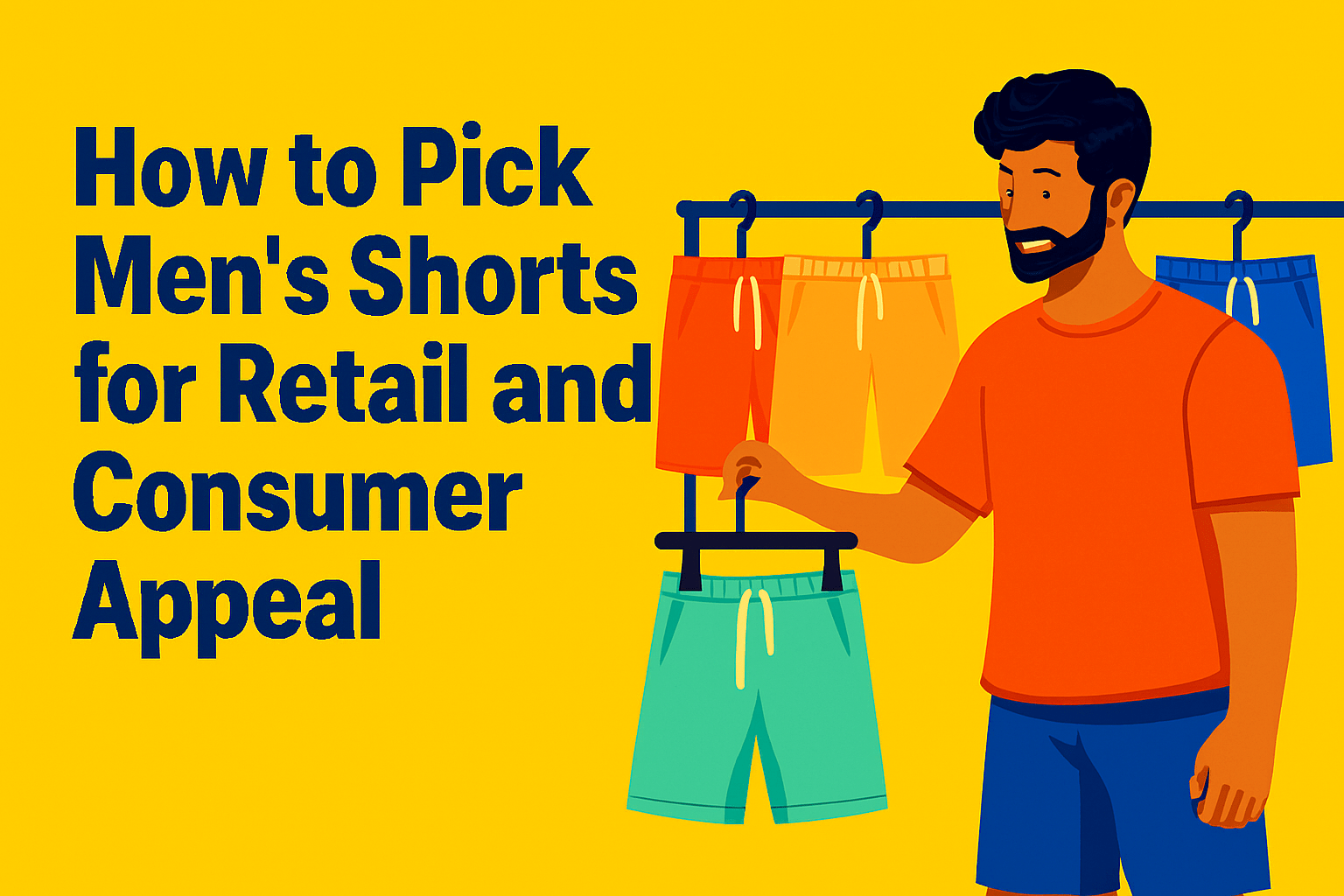
The decision regarding men’s shorts is key to creating a successful retail offering. Men want their shorts to fit comfortably, be made from quality fabrics, and not compromise on style, and they also want these attributes to be displayed in silhouettes that associate with current-day living styles. What most start-up retailers struggle with is knowing what fabrics to buy, what lengths are popular in the market, and how to balance current trends with practical inventory management. This article will outline for them the most logical and streamlined strategy to select men’s shorts that are not only appealing on the rack but also sell well online, effectively ensuring that every SKU they stock creates additional revenue for them. After reading the blog, readers should know what criteria consumers use to determine whether or not to purchase men’s shorts and will also learn how to create an effective lineup of retail shorts styles that will continually generate interest.
Before choosing items for retail, a retail buyer must uncover what truly drives purchase decisions of their customers. Some of the bestselling shorts types are purchased because they feel effortless, fit well, and blend into their daily routines. The retailer must ask: What problem does each pair of shorts solve for the customer?
Your Strategy
Start by mapping consumer priorities: comfort, mobility, seasonality, and versatility. You can glean a lot of information by observing the buying behavior like how shoppers compare waistbands, or test stretch.
Prerequisites:
A retailer should already have a basic understanding of their buyers’ profiles like age, lifestyle, budget.
Best Practices:
• Comfort comes first; most returns occur because fabric feels rough
• Give diverse choice to your customers by offering multiple fits (regular, slim, relaxed). Fitting plays a vital role in adapting to the figure for stylistic appeal.
• Keep a mix of everyday neutrals and 1–2 seasonal colors to attract browsing customers.
Tools:
Customer surveys, in-store observation checklists, and competitor analysis sheets.
Retail assortment should not be random. Instead, it should reflect the most in-demand categories men repeatedly purchase.
Your Strategy
During bulk buying go for basic categories such as chino shorts, athletic shorts, denim shorts, cargo shorts, and swim shorts. Every shorts segment has its own appeal because it solves a different customer need.
Warnings:
Avoid overspending on highly fashionable, specific niche categories. Your focus should be on establishing baseline staples that have broad appeal.
Best Practices:
• Keep chino shorts in multiple lengths; they anchor any summer lineup.
• Athletic shorts sell year-round; ensure stock consistency.
• Cargo shorts appeal to utility-focused buyers; don’t underestimate them.
Tools:
Sales data recorders, seasonal trend reports, retail assortment templates.
Your Men’s shorts selection strategy should cover these three aspects as they rate highly in any customer purchase decision.
Your Strategy:
Begin by inspecting the fabric types such as cotton twill, polyester blends, stretch denim, and synthetics. Once you have decided the fabric move on to analyze the fit. Look at the waist, rise, leg opening, and silhouette to estimate the fitting. Length typically ranges from 5" to 9".
Warnings:
Linen wrinkles easily; retailers should communicate care expectations upfront.
Best Practices:
• Use stretch blends (2–4% elastane) for comfort-focused customers.
• Stock at least two lengths: 7" and 9" to satisfy varying preferences.
• Highlight breathable fabrics for hot climates without complicating the sales narrative.
Tools:
Fabric swatch kits, fit forms, sizing sample sets.
Quality sets the tone for brand credibility, especially for retailing brands.
Your Strategy:
For judging quality, the first thing to notice during purchase is the stitching. This includes inspecting features like seam reinforcement, zipper strength, and waistband elasticity.
Warnings:
Do not buy shorts with thin waistbands or loose stitching.
Best Practices:
• Double-stitched hems and bartacks at stress points are main markers of quality.
• Selct shorts that have zipper made from reputable manufacturers.
• Test waistband recovery after multiple stretches.
Tools:
Quality inspection checklist, product comparison board.
Presentation turns a good product into a must-buy moment.
Your Strategy:
Your merchandising strategy should give you an edge over your competitors. The best way to do that is to highlight colors, fits, and uses. Group shorts by lifestyle category to help customers quickly self-identify what they need.
Warnings:
Cluttered racks confuse buyers; avoid mixing athletic with casual wear.
Best Practices:
• Pair shorts with complementary tops on mannequins.
• Use clear signage for lengths: shoppers care more than many retailers expect.
• Keep texture variety visible: linen, twill, and denim attract visual curiosity.
Tools:
Front table layouts, mannequin guides, color story boards.
Problem: Shorts sell well online but poorly in-store.
Solution: Review in-store merchandising; consumers may not see full color or fit options.
Problem: Customers complain about inconsistent fits.
Solution: Standardize brands or ensure size charts follow one clear measurement system.
Problem: Slow-moving inventory in off-season.
Solution: Reposition shorts as travel essentials or bundle with tops during transitional months.
Problem: Excess returns for comfort-related issues.
Solution: Add stretch fabrics, softer waistbands, or clearer size guidance.
Selecting men’s shorts for a retail lineup requires more than guessing trends. As a retailer, you need to deliver value to the customer and that entails having a sound understanding of comfort, fit, and everyday practicality. Your focus should be on developing a shorts lineup that makes selection seem effortless for the customer. The only way to do that is to stock the right categories and merchandise with clarity. The advice we provided in this blog will help startup retailers like you to make smarter buying decisions and create assortments that drive repeated sales. Now the next step is simple: apply these principles to the upcoming season and watch the product line gain momentum.
There are lots of things that contribute to the women’s trousers selection because comfort
READ FULLStyling Women’s Pants for Casual and Professional Settings A wardrobe must have a
READ FULLThe trend of baggy bottom wear is back, and it is going pretty well in both men's and women's fas
READ FULL